Equipping a kitchen to cook like a chef is not just about filling drawers. Most articles on the subject offer lists of utensils as long as a catalog, without asking the prior question: what do we really need when cooking every day in a residential space, with its constraints of storage, cleaning, and time?
Kitchen Workflow: The Real Starting Point Before Any Purchase
Restaurant kitchens operate on a principle called “forward flow”: food moves in one direction, from storage to preparation, then to cooking and plating. Reproducing this logic at home radically changes the comfort of cooking, even in a small space.
Before buying any utensils, one must observe their own movements. If the cutting board consistently ends up on the living room table due to a lack of clear counter space, the problem is not a lack of equipment. It’s an issue of organizing the zones.
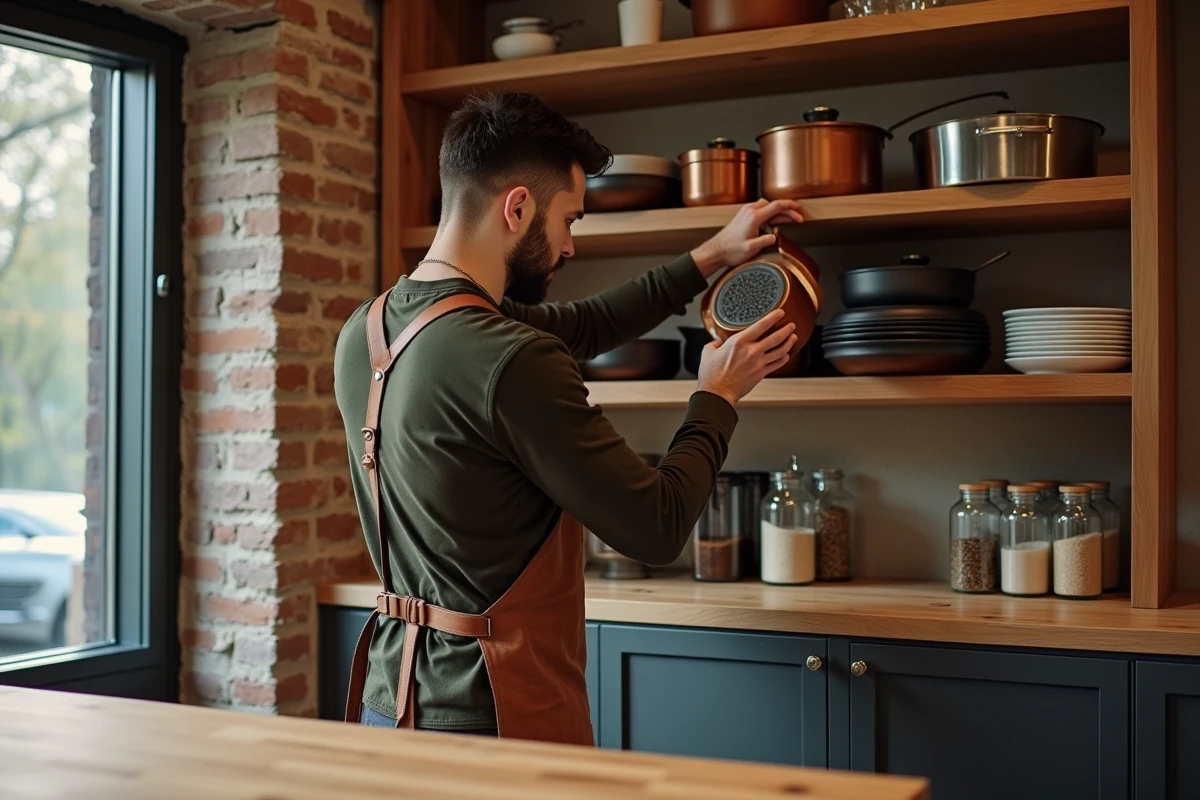
Three zones are sufficient in a home kitchen: a preparation zone (sink, countertop), a cooking zone (stovetop, oven), and an accessible storage zone (drawers, countertop). The goal is to reduce unnecessary back-and-forth movements. When you start sorting your utensils according to these three zones, you keep those you use several times a week; for example, the equipment presented on 75cl provides an overview of this approach by usage categories rather than by type of object.
Cooking Utensils: The Realistic Kit for Daily Cooking
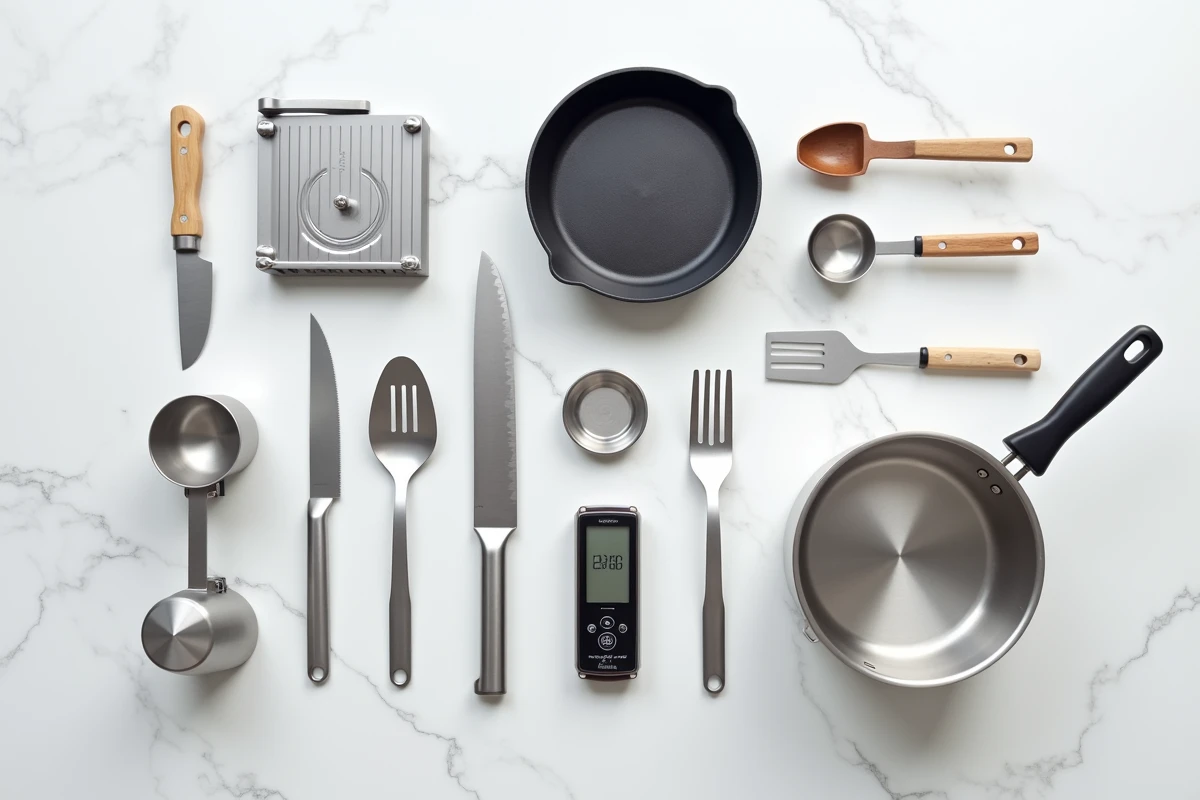
A professional chef uses fewer utensils than one might think. In a brigade, each cook works with a chef’s knife, a paring knife, a cutting board, a frying pan, and a saucepan. The rest is specialized according to the position. At home, this logic of functional minimum holds perfectly.
Kitchen Knives: Two Blades Are Enough
A versatile chef’s knife (blade 20 to 25 cm) and a paring knife (short blade, 8 to 10 cm) cover almost all domestic cutting needs. Sets of six knives often contain blades that never leave the drawer.
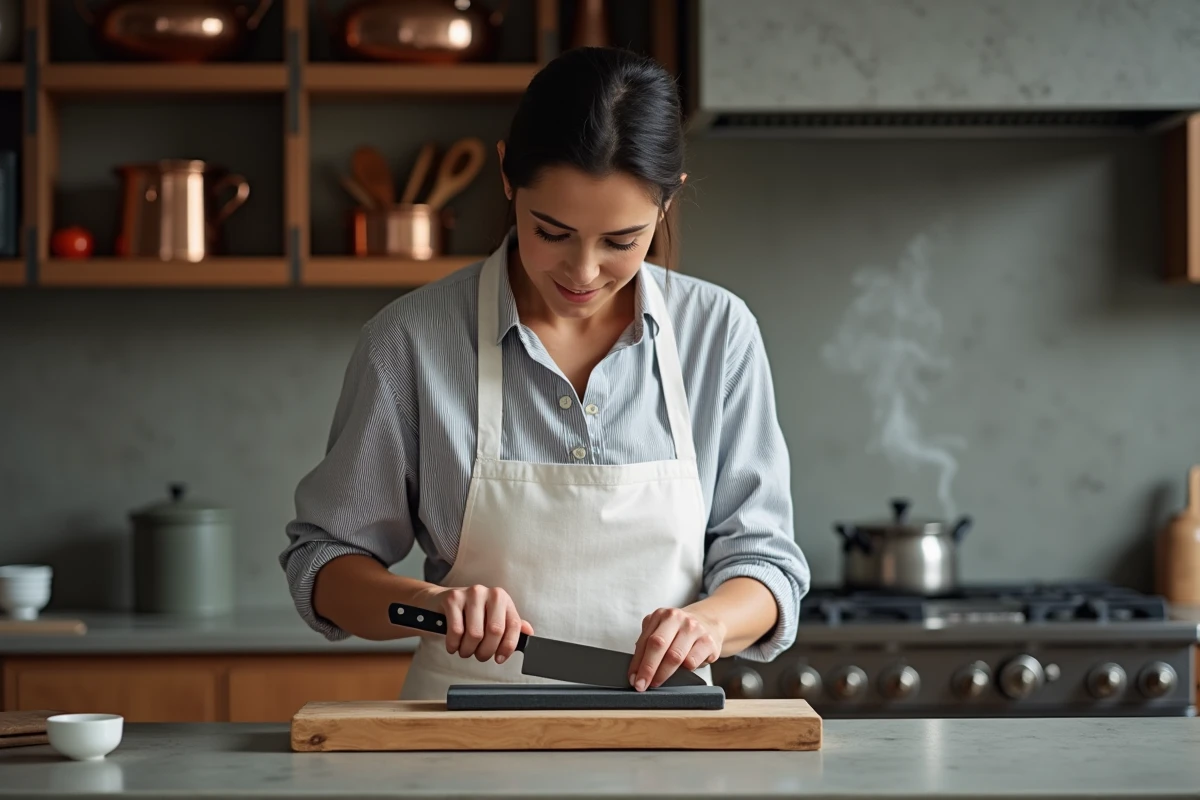
A good knife, well-maintained, replaces half a dozen average blades. Regular sharpening, with a honing steel or a stone, matters more than the brand or purchase price.
Cooking: Frying Pan, Saucepan, Dutch Oven
Three cooking pieces allow for the preparation of the majority of everyday recipes:
- A 28 cm frying pan in stainless steel or cast iron, which withstands high temperatures and can go in the oven safely
- A medium-sized saucepan for sauces, vegetables, eggs
- A Dutch oven or casserole for stews, soups, long cooking
Stainless steel and cast iron last for decades if properly maintained. Non-stick coatings lose their effectiveness after a few years and end up being replaced, which is more expensive in the long run.
Air Quality and Ventilation: The Overlooked Angle of Home Cooking
Content on kitchen equipment says little about ventilation. The hood is often treated as a decorative accessory. In reality, daily cooking generates grease particles, water vapor, and volatile compounds that accumulate on walls, furniture, and in the lungs.
A properly sized hood, correctly connected to an exterior outlet does more for kitchen comfort than a multifunctional robot. Recirculating hoods (charcoal filter) remain a compromise for homes where direct extraction is impossible, but their effectiveness on grease is significantly lower.
In kitchens open to the living room, this point becomes a real issue. Odors and greasy residues do not stop at the countertop. Before investing in small appliances, it’s worth checking that the hood actually works.
The Accumulation Trap: What to Avoid Buying
The kitchen accessory industry operates on a simple principle: offer a specialized object for each task. Citrus juicer, avocado slicer, mango peeler, egg mold, tomato slicer. Most of these objects serve one or two times, take up a drawer, and then end up given away or thrown out.
An utensil that is not used at least once a week has no place in a small kitchen. This simple rule allows for effective sorting. A quality peeler replaces specialized peeling gadgets. A well-chosen mandoline covers the fine cuts that ten different accessories promise to achieve.
Electric appliances deserve the same critical examination. A bulky stand mixer is justified if you knead bread or brioche every week. For occasional use, a simple mixing bowl and a whisk do the job.
The Cleaning Question
Every added utensil is one more utensil to wash. Multi-part appliances (immersion blender with attachments, juicer, electric pasta machine) sometimes require more cleaning time than actual preparation.
Field reports vary on this point, but the general trend observed among regular cooks is clear: simple tools, without detachable parts, always return to the countertop. The rest migrates to the back of the cupboard.
Materials and Maintenance: Choosing What Lasts
The choice of materials determines the lifespan of the equipment and the time spent maintaining it. Here are some concrete guidelines:
- Food-grade stainless steel resists corrosion, does not retain odors, and is easy to clean, which explains its massive presence in professional kitchens
- Enamelled cast iron retains heat evenly, ideal for slow cooking, but its weight makes it impractical for quick daily use
- Wood (cutting boards, spatulas) requires regular maintenance (oil, drying) but does not damage knife blades, unlike glass or hard plastic
- Flexible plastic boards go in the dishwasher and are suitable for cutting raw meat for hygiene reasons
A durable kitchen setup relies on a few well-chosen pieces, suited to how one actually cooks. The best chef’s kitchen at home is not the one that contains the most objects, but the one where each tool has a logical place and frequent use.