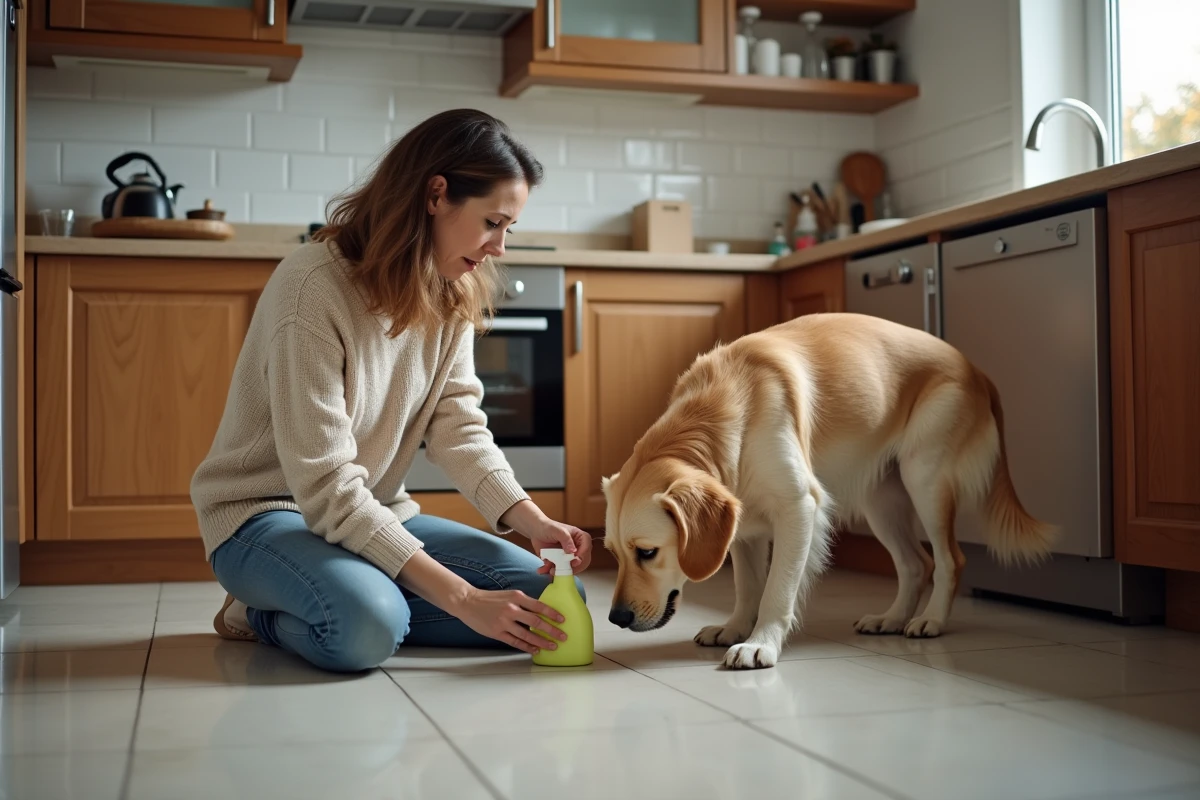
A smooth, immaculate floor that shines from the living room to the kitchen: this is the enticing promise of most disinfectants. Yet, beneath this clean surface lies a much less glamorous reality for the animals that share our daily lives. The labels boast effectiveness against microbes, but very few warn of the silent dangers these products pose to dogs and cats.
In light of this observation, veterinarians are raising the alarm: the use of ordinary household products is regularly implicated in cases of poisoning, burns, and even allergic reactions in our pets. In the hustle of cleaning, it’s easy to forget that our companions live close to the ground. They sniff, rub against, and lick every surface just after it has been cleaned. Day after day, this exposure repeats, often unbeknownst to everyone, and the consequences should not be underestimated.
Sanytol and pets: what you need to know
In many households, Sanytol reigns supreme in cleaning product cabinets. While it is formidable at eliminating microbes, it is equally effective at exposing our animals to substances that are unsuitable for them. Dogs and cats have thinner skin, more reactive mucous membranes, and an obsession with sniffing and licking everything, which puts them at risk of ingesting or absorbing residues left behind after cleaning.
We don’t always look closely at the composition, and that’s where the problem lies: many molecules present in Sanytol, designed for disinfection, can irritate, inflame, or even prove toxic to our animals. Inhaling vapors, crossing a still damp area, or licking themselves after a simple pass over the floor can all lead to vomiting, digestive issues, or even affect the liver or the nervous system. Hence, the necessity to be vigilant, especially in areas where your pets eat, sleep, or play.
Every pet owner must therefore adapt their habits. Ventilation during cleaning, temporarily excluding pets from freshly cleaned rooms, careful reading of labels… these are all reflexes to adopt. Those who wish to delve deeper into this topic will find plenty of useful information and recommendations on the dangers of Sanytol for animals. Stay alert: strange behavior, unexpected symptoms, and it’s best to call a veterinarian or an animal poison control center without delay.
Why some ingredients in Sanytol can be dangerous for your cat?
We don’t always suspect seemingly harmless products, but the formula of Sanytol contains several chemical components whose effects on cats are far from trivial. Their fragile skin, combined with a persistent grooming habit, places them at the forefront of exposure. It is not necessary for a cat to ingest the product: simply breathing in the vapors or touching a surface with residues can trigger sometimes severe reactions.
The consequences can be immediate or insidious: irritations, skin allergies, gastrointestinal issues, respiratory difficulties. The warning signs are unmistakable: sudden salivation, lethargy, vomiting, or even convulsions in severe cases. If there is any doubt, every minute counts: quick action saves lives.
To clearly identify risky circumstances, here are the most common situations:
- The cat places its paws on a still damp surface or plays with an object that has just been disinfected.
- Residues of the product stick to its paw pads, or it inhales droplets suspended in the air during cleaning.
In France, few specific regulations require manufacturers to ensure the safety of animals in relation to cleaning products. This vigilance falls to the owners. If any symptoms appear, or at the slightest concern, it is essential to urgently contact a veterinarian or an animal poison control center. Time makes all the difference here.
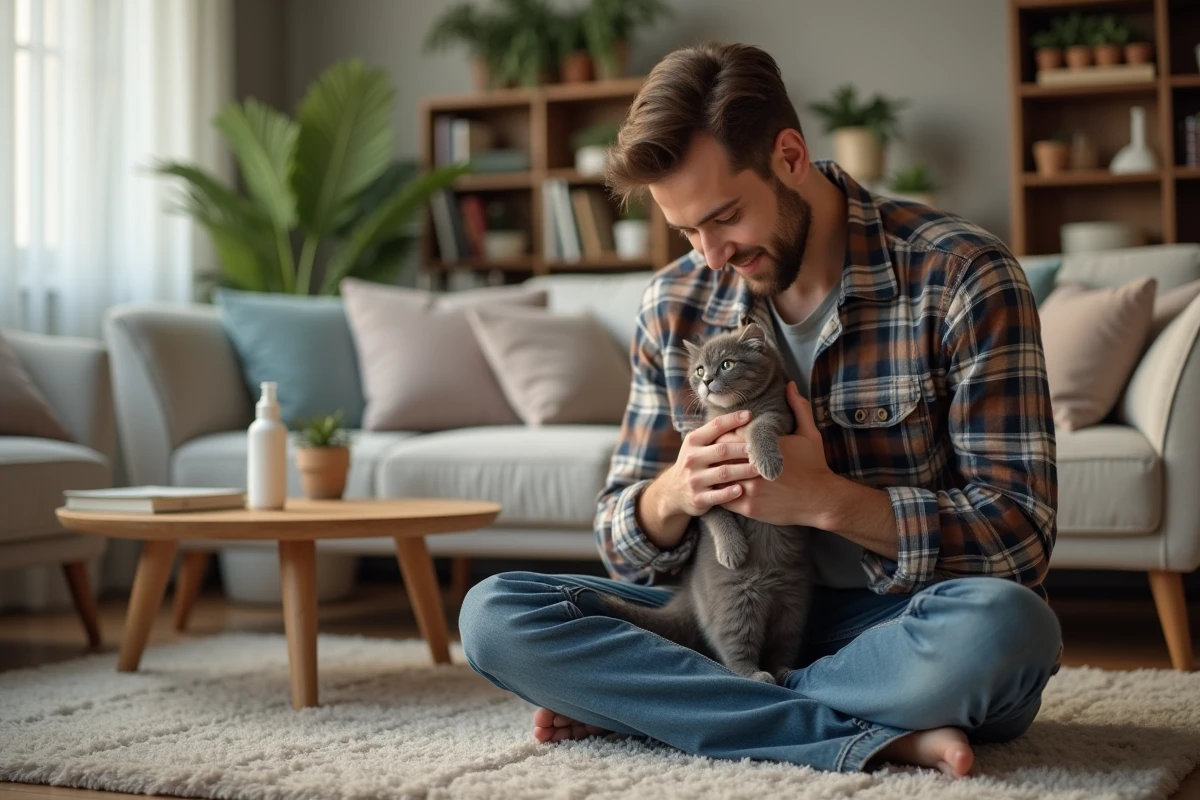
Healthier alternatives for a clean and safe home for your companions
Keeping your home clean does not require sacrificing the health of your animals. Proven options exist that can clean effectively while minimizing risks. Several simple and natural solutions are perfectly suited for a healthy coexistence between humans and animals.
Among the reliable options, Marseille soap stands out: unscented and free from harsh additives, it cleans without polluting your pets’ immediate environment. To disinfect safely, diluted white vinegar proves very effective: it combats most bacteria and does not expose dogs or cats to problematic substances. For odors, nothing beats baking soda for deodorizing and cleaning surfaces or accessories that animals come into contact with daily.
To introduce these alternatives smoothly, here are several practical uses to remember:
- Clean and simple floors with a mixture of hot water, white vinegar, and Marseille soap flakes.
- Baking soda sprinkled on litter boxes or beds before washing to absorb and neutralize bad odors.
- For bathroom surfaces: a damp sponge and pure white vinegar ensure impeccable cleanliness.
Choosing non-toxic cleaning products for animals is a commitment to prevention and concrete care. Reading every label, favoring short and simple formulas, and ensuring good ventilation after each use: these are all habits to adopt daily. Sometimes, a little extra caution can prevent heavy regrets over an action that seemed harmless.