
A capsule wardrobe refers to a reduced set of versatile clothing items, sufficient to cover nearly all daily situations. Knowing how many pieces to actually keep in your closet requires going beyond a simple generic number to think in terms of functions: each piece of clothing must serve a specific purpose, or it risks cluttering without serving a function.
Adapting the basics of a capsule wardrobe to your body shape
Most essential lists propose the same items: a straight-leg jean, a white t-shirt, a blazer, a little black dress. The problem is that these basics do not fit all body shapes in the same way.
A slim jean may flatter a long and lean figure but compress a rounder silhouette at the thighs. Conversely, high-waisted wide-leg pants visually balance a long torso by accentuating the waist. The logic of the capsule wardrobe remains the same (few pieces, high versatility), but the choice of cuts must follow body shape, not trends.
Three concrete guidelines help with sorting:
- Identify the area of the body you want to enhance or balance (shoulders, waist, hips) before choosing a basic piece.
- Test each item in at least two different outfits. If it only works in one context, it doesn’t belong in a capsule.
- Favor materials with a minimum of structure (thick cotton, blended wool) that shape the silhouette without adding unnecessary layers.
Asking how many clothes one should have ultimately comes down to identifying the cuts that serve the most functions for your own silhouette, rather than aiming for a round number.
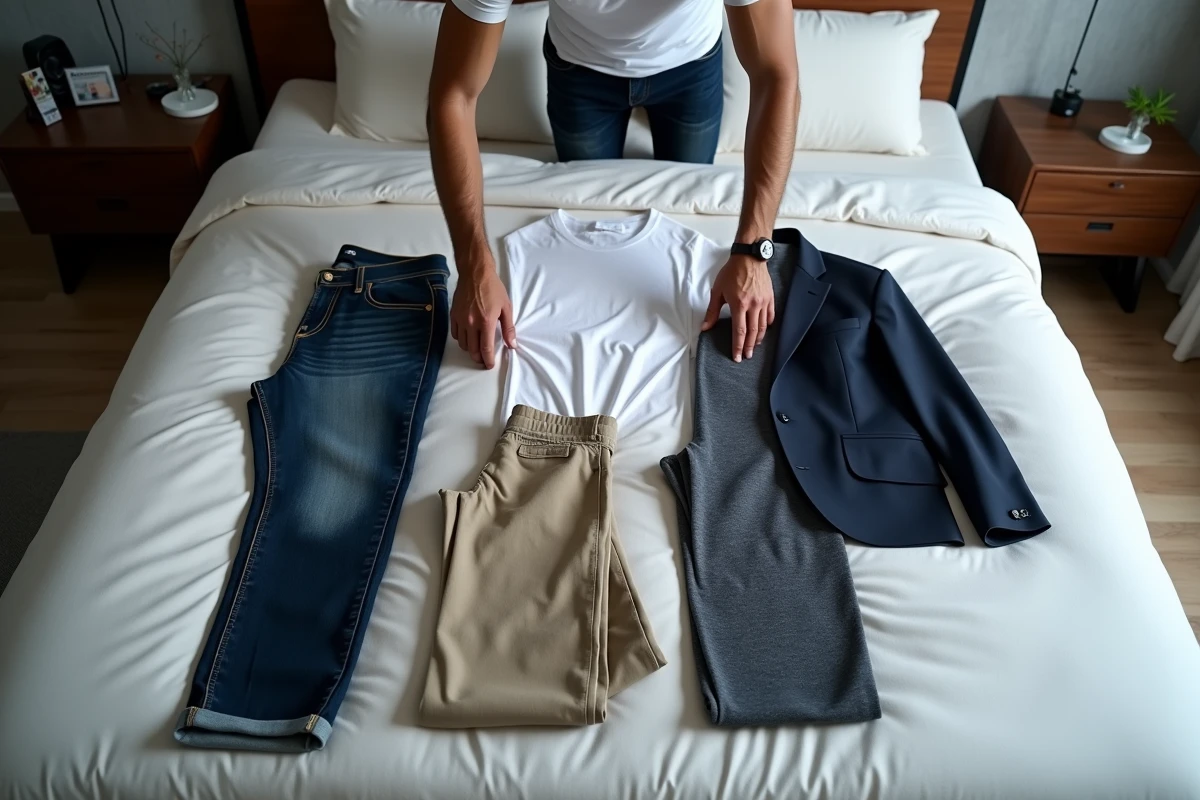
Number of pieces by category: a functional wardrobe season by season
Feedback from people practicing clothing minimalism for several years converges around a range of 25 to 35 pieces to cover a full season, excluding underwear and sportswear. This number is not magical: it stems from the relationship between washing frequency and the number of days in a week.
Tops and bottoms for daily wear
Five to seven tops (t-shirts, shirts, sweaters) allow for a week without an emergency laundry. For bottoms, three to four pairs of pants or skirts are sufficient if the colors remain within a coherent palette. Compatible colors multiply combinations without adding volume to the wardrobe.
Layering pieces and outerwear
Two lightweight jackets and one coat cover the majority of climatic variations in a season. A structured blazer doubles for professional wear and evening outings. One pair of dress shoes and one pair of versatile sneakers complete the base.
The common trap is to multiply pieces “just in case”: the cocktail dress worn once a year, the hiking pants kept out of principle. An item worn less than once a month is not an essential.
Unisex clothing and reducing household volume
An approach gaining traction in households is to incorporate unisex pieces into family wardrobes. A thick cotton t-shirt with a straight cut, a hoodie, or an oversized coat can circulate among several household members.
This sharing significantly reduces the total volume of clothing in the household while increasing flexibility. A teenager and a parent of similar sizes can share certain basics without anyone lacking outfits.
Unisex pieces function as wildcards in a family capsule wardrobe. The selection criteria remain the same: straight cut, neutral color, material dense enough to structure the silhouette regardless of body shape.

Digital labeling and sustainability: choosing pieces that last
The European directive (EU) 2025/447 adopted in March 2025 requires brands to provide digital labeling indicating the durability and reparability of each garment. This information changes the way a capsule wardrobe is built.
Until now, assessing the longevity of a garment in-store relied on intuition: feeling the fabric, checking the seams. Digital labeling allows for objective comparison of two similar pieces before purchase.
In practical terms, a piece with a high reparability score justifies a larger budget at purchase. A repairable garment worn for five years costs less than a basic item replaced every season. This calculation is at the heart of the capsule logic: investing in fewer pieces, but of better quality.
What to check before buying a durable basic
- The durability score displayed via the digital label, when available.
- The fabric composition: blends containing more than two synthetic fibers complicate recycling and often repair.
- The availability of replacement parts (buttons, zippers) from the brand, a sign of a real commitment to the product’s lifespan.
Building a wardrobe of 25 to 35 versatile pieces, suited to your body shape, in materials designed to last several seasons, represents an initial effort of sorting and selection. Once this foundation is in place, purchases become rare and targeted. The question of how many clothes to own resolves itself when each piece in the wardrobe has a clear function and none remain folded without being worn.