In a world facing the challenge of climate change, interest in sustainable building practices is experiencing a resurgence. Among these, rammed earth, a traditional method using raw earth as the main material, is capturing the attention of modern architects and builders. This technique, which is centuries old, has its roots in various cultures around the globe. It illustrates a forward-thinking ecological approach, promoting local and renewable resources. This ancestral know-how offers an alternative to energy-intensive contemporary methods and highlights the virtues of simplicity, low environmental impact, and harmonious integration into ecosystems.
Rammed Earth: Rediscovery and Contemporary Applications of a Traditional Method
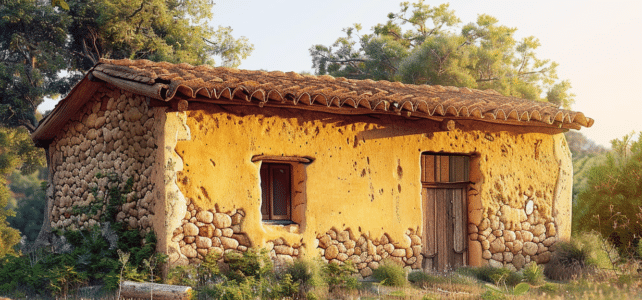
The rediscovery of the rammed earth construction technique is part of a quest for sustainable solutions. Rammed earth, consisting of compacting raw earth between formwork, exhibits remarkable properties such as thermal inertia and hygrothermal performance. These characteristics make raw earth a material of choice in the current context, where reducing carbon footprint has become a priority. Contemporary real estate projects such as ‘Ydéal Confluence‘ in Lyon, built by the company OGIC, illustrate the modern application of this ancient technique, demonstrating its relevance and viability.
The architects of Clément Vergély Architectes drew on this know-how for the ‘Orangerie‘ project, using earth sourced from Saint-Quentin-Fallavier. This deliberate choice of local materials illustrates an approach to circular economy, where every element of the building is considered within a zero-waste logic. a rammed earth house represents not only a biothermal dwelling but also an affirmation of a construction philosophy that is conscious of environmental challenges.
The expertise of researchers like Jean-Claude Morel from Coventry University and specialized entrepreneurs such as Nicolas Meunier contributes to the rehabilitation and innovation in the field of rammed earth. Their work allows for refining implementation methods and promoting the adaptation of these techniques to current construction standards, without abandoning the principles of architecture that respects its environment.
The challenges related to the renovation of historic buildings also encourage the rediscovery of rammed earth. In the rehabilitation of historical structures, the use of original materials is essential to preserve architectural integrity. Rammed earth, a traditional material, proves to be suitable for this type of intervention, offering restorers an option that is both authentic and ecological. The synergy between heritage and innovation is revealed in these walls steeped in history, witnesses to a respectful renewal of our ancestors’ techniques.
Challenges and Innovations in Rammed Earth Construction in the Ecological Era
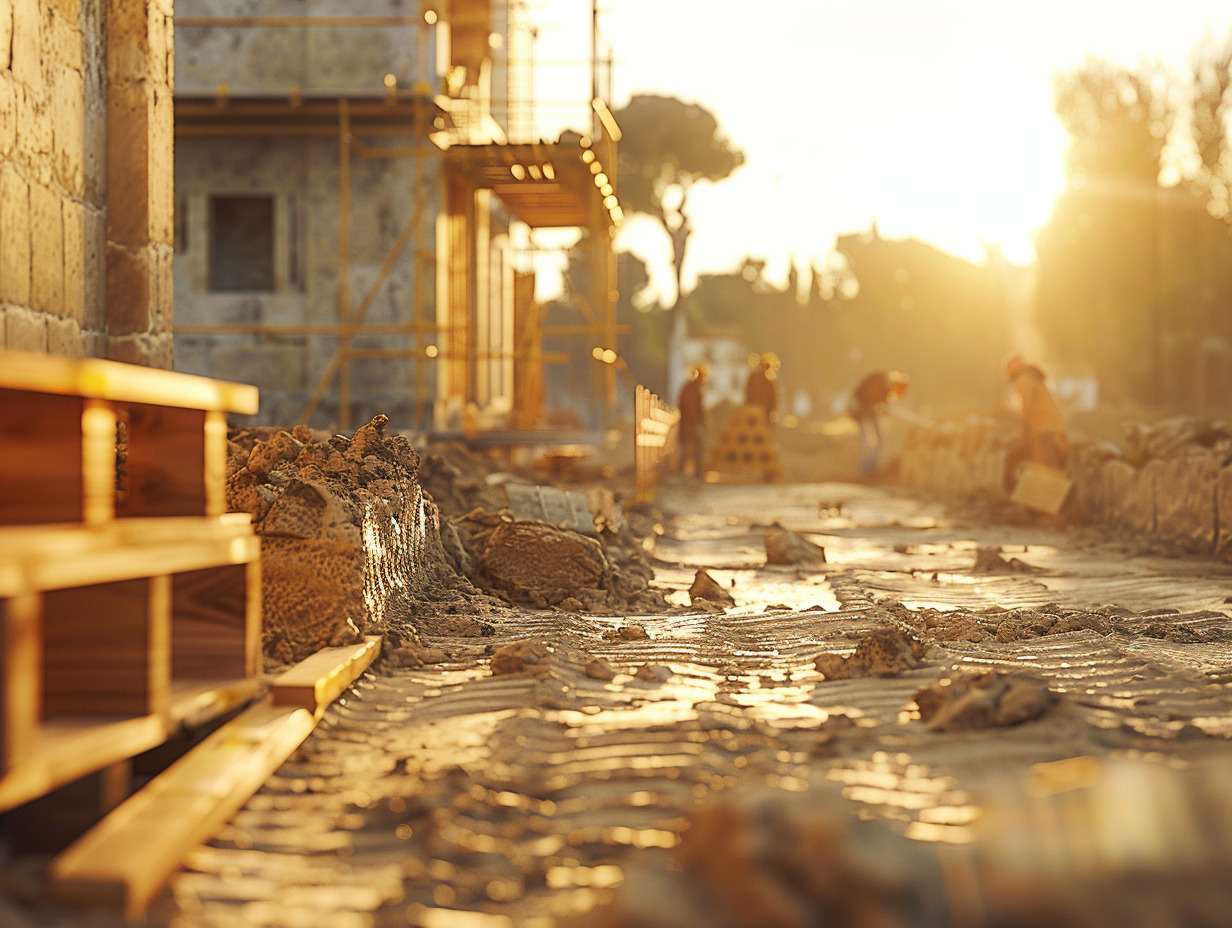
Faced with the imperatives of sustainable development, rammed earth construction encounters significant challenges. The integration of bio-sourced materials into contemporary construction standards requires in-depth studies and technical adaptations. Specialized engineering firms such as Batiserf, Scoping, and Etamine are at the forefront of reconciling regulatory requirements with the natural properties of raw earth. Their work ensures the structural safety of rammed earth buildings while optimizing their energy performance.
The design of passive houses using rammed earth illustrates the fusion of ancestral heritage and innovation. The thermal inertia and hygrothermal properties of raw earth provide natural comfort, minimizing reliance on heating or cooling systems. Architects and engineers must rise to the challenge of harmoniously integrating these capabilities into modern and functional designs. The Metropolis of Lyon and SPL Confluence are committed to this path, supporting innovative projects that reinterpret rammed earth for current needs.
Geographical location significantly influences the implementation of rammed earth. In the Auvergne-Rhône-Alpes region, the availability of earth and the tradition of raw earth construction promote experimentation and adoption of this method. Local stakeholders, aware of this wealth, are committed to enhancing this heritage by putting it to the service of the circular economy. The earth, once extracted, is used, reused, or returned to the soil, thus reducing the environmental impact of construction sites.
Visual documentation plays a fundamental role in promoting rammed earth. Photographers Fabrice Fouillet and Erick Saillet capture the aesthetics and substance of these buildings, helping to raise awareness among the public and professionals about the advantages of this millennia-old technique. Their work highlights the raw beauty and ecological relevance of rammed earth, generating renewed interest in this material within the modern construction sector.